A monthly publication of the UGA Office of Research with the latest funding opportunities and announcements in support of our research community. |
| |
-
Grant Opportunities
- Humanities & Arts Opportunities
- Foundation Opportunities
- Mission Agency Opportunities
-
Limited Submissions
- Recent Notable Awards
- Grantsmanship Tip of the Month
- Sign up for Funding Alerts
-
External Honors & Awards
|
|
|
NSF: Collaborations in Artificial Intelligence and Geosciences (CAIG) Amount: Unspecified Deadline: Feb. 4, 2026
Supports interdisciplinary projects that leverage AI to address geoscience challenges, fostering collaboration between experts to advance Earth system understanding and workforce development.
NSF: Mathematical Foundations of Artificial Intelligence Amount: $500,000 - $1.5 million
Deadline: Oct. 9, 2026 Funds research collaborations between mathematicians, statisticians, computer scientists, engineers, and social behavior scientists to establish innovative and principled design and analysis approaches for AI technology. FFAR: Rapid Outcomes from Agricultural Research
Amount: $250,000 Deadline: Rolling deadline
Deploys urgent funding in response to emerging or unanticipated threats to the nation’s food supply or agricultural systems.
NSF: Infrastructure Systems and People (ISP) Amount: $200,000 - $500,000
Deadline: Proposals accepted anytime Supports fundamental research on design, optimization, sustainability, and resilience of infrastructure systems during normal operation and extreme events to serve community needs. |
Humanities & Arts Opportunities |
NEH Scholarly Editions and Translations Amount: $300,000
Deadline: Dec. 3 Helps collaborative teams edit, annotate, and translate foundational humanities texts vital to generating new scholarship but inaccessible or only available in inadequate editions or translations. Creative Engagement Wing (CEW) Fellows Program Amount: N/A Deadline: Jan. 16, 2026 Helps UGA faculty redesign student-centered assignments that integrate emerging technologies and active learning practices. Special Collections Libraries Faculty Fellows Amount: $3,000 Deadline: Jan. 16, 2026 Collaborate with archivists in the university’s three special collections libraries to include an archives-focused approach to pedagogy and design of a new or existing course. |
Cystic Fibrosis Foundation Basic Research Grants Amount: Up to $150,000 per year for up to 3 years Deadline: Dec. 9
Supports hypothesis-driven research with preliminary data, prioritizing projects that uncover disease mechanisms and develop prevention or treatment strategies.
American Association for Cancer Research (AACR)
Breast Cancer Research Foundation-AACR Career Development Awards Amount: $150,000 Deadline: Dec. 16 Funds innovative early-career research related to breast cancer and designed to accelerate discovery, development, and application of new therapies.
Foundation for Food & Agriculture Research Packaging Innovation Program
Amount: $50,000-$250,000
Deadline: Dec. 17 Supports the Packaging Innovation Program, which develops compliant packaging and alternatives for specialty crops in response to emerging regulations in the EU, UK, Canada, Japan, and other key markets.
EveryCat Health Foundation Feline Research Grants
Amount: $50,000
Deadline: Jan. 9, 2026 Funds research concerning origins of feline illness, diagnosis of feline diseases, development of effective treatments, and identification of prevention strategies. PADI Foundation Grants for Aquatic Research and Education Amount: Up to $12,000 Deadline: Jan. 15, 2026 Supports research into aquatic environments, diving physics and physiology, or climate-related hazards to humans and marine ecosystems. |
Mission Agency Opportunities |
FY 2026 Continuation of Solicitation for the Office of Science Financial Assistance Program Amount: $5,000-$5 million Deadline: Sept. 30, 2026
Funds basic research supporting the Department of Energy Office of Science mission, including advanced computing, energy sciences, environmental research, fusion and high-energy physics, nuclear physics, and isotope R&D.
Track at Big Distances with Track-Before-Detect (TBD2) Amount: N/A
Deadline: Dec. 4 Helps advance signal-processing algorithms that enable continuous, timely, space-based detection and tracking of faint cislunar objects using commercial or quasi-commercial optical sensors. |
Genipin’s ECM Crosslinking Action as an Agent to Prevent Neurodegeneration in Familial Dysautonomia Funder: National Institutes of Health Amount: $2,950,014
PI: Nadja Zeltner, Center for Molecular Medicine DOE Center for Plant and Microbial Complex Carbohydrates
Funder: U.S. Department of Energy Amount: $2,805,000 PI: Parastoo Azadi, Complex Carbohydrate Research Center Advancing Gene Functional Analyses, Adaptation, and Regeneration in Upland and Lowland Switchgrass via Single-Cell Genomics
Funder: U.S. Department of Energy Amount: $2,183,886 PI: Robert Schmitz, Franklin College of Arts and Sciences, Department of Genetics
Collective Behavior of Oscillators in Fungal Filaments of Neurospora Crass (Clock) Funder: National Science Foundation Amount: $1,324,119 PI: Jonathan Arnold, Franklin College of Arts and Sciences, Department of Physics and Astronomy Center for Innovation in Risk, Catastrophes, and Decisions (CIRCAD) Funder: National Science Foundation
Amount: $500,000 PI: Marc Ragin, Terry College of Business, C. Herman Terry Risk Management and Insurance Program |
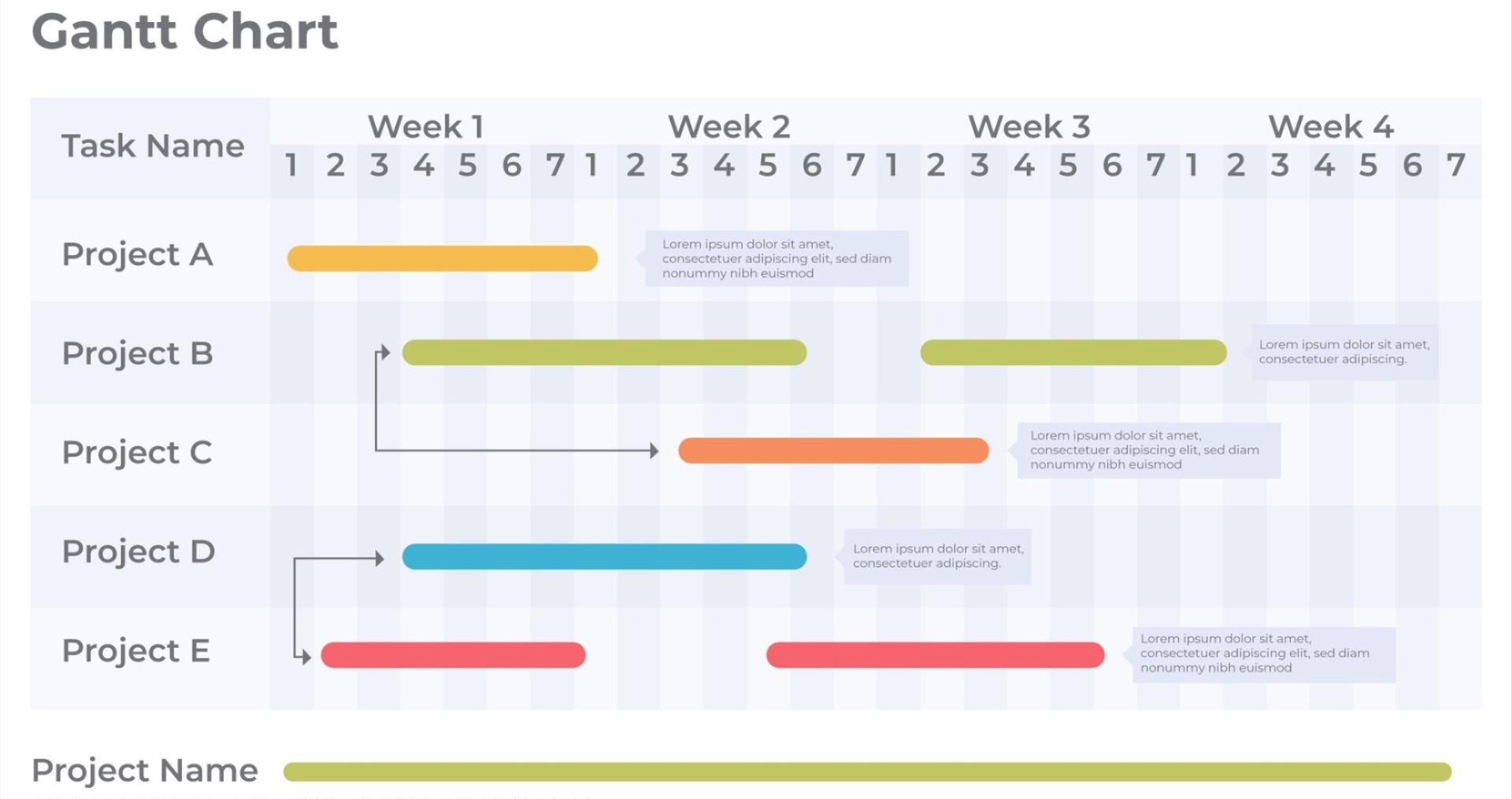
Creating a timeline and checklist spreadsheet for your grant proposal will help ensure timely progress toward completing all required components.
First, read the funding solicitation carefully and enter each required component on its own row. Next, review the funding agency’s general application guide to identify any standard documentation required for all applications that might not be included in the solicitation. Build out the timeline week by week across the columns, selecting target dates of completion for each component. For projects involving multiple collaborators, add a column showing who is responsible for overseeing each application component.
Resources, templates, and other tools for developing your proposal—including timeline/checklist templates—can be found on the Office of Strategic Research Development website. |
Sign Up for Funding Alerts |
|
|
| Charles Davis receives Weltner Award from Georgia First Amendment Foundation
Charles Davis, dean of the Grady College of Journalism and Mass Communication and a First Amendment scholar, received the 2025 Charles L. Weltner Freedom of Information Award from the Georgia First Amendment Foundation in a ceremony held Oct. 28. The award honors a person or group whose work has significantly improved freedom of information in Georgia. The award is named after Weltner, a former Georgia Supreme Court Chief Justice and member of the U.S. House of Representatives. |
|
|
The Office of Research maintains a list of external honors and awards to encourage faculty applications. |
|
|
Research Live: Building a Foundation for Research Funding Success 11:30 a.m.-12:30 p.m., Tuesday, Dec. 2 Register via Zoom In this Research Live webinar, experts in foundation relations will share tips that will help UGA researchers establish connections with foundations that align with their work, develop connections with the decision makers at those organizations, and craft funding proposals that resonate with foundation priorities.
Webinar: Nanomaterials and the CFN: How to Collaborate
11 a.m.-12 p.m., Tuesday, Jan. 27, 2026 Register via Zoom
This webinar is the second in a quarterly series co-hosted by the UGA Research Institute (UGARI) and Brookhaven National Laboratory (BNL). It will be presented by Kevin Yager, interim director of BNL’s Center for Functional Nanomaterials. |
|
|
HRPP reaccreditation site visit
UGA’s Human Research Protection Program (HRPP), accredited by the Association for the Accreditation of Human Research Protection Programs (AAHRRP) since 2018, will undergo reaccreditation this December. AAHRPP’s site visit on Dec. 10–11 will include interviews with selected faculty, staff, and IRB members. We appreciate everyone’s participation as we demonstrate UGA’s strong commitment to ethical research and human participant protection. Learn more on the HRPP website.
New AI research assistant launches in beta
The Office of Research has launched a new AI Research Assistant, a chatbot trained on content from the OoR website, the UGA Policy Library, and other university resources. The tool is available in beta exclusively to UGA community members via SSO authentication. Users can access the chatbot here and are encouraged to share feedback via the link on the page.
|
|
|
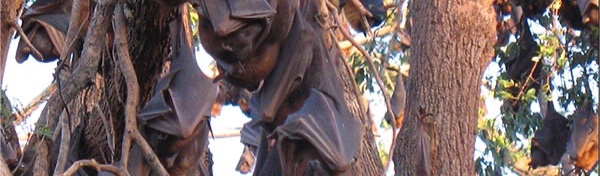
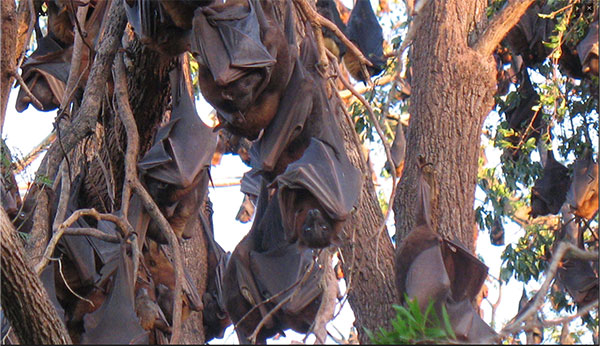
Little red flying foxes, like these at the Boonah colony, hang together like clusters of grapes—unlike other species, which typically give each other a body length of space. Sánchez also spent three months in Geelong, Victoria, at the Australian Animal Health Laboratory (AAHL), where she analyzed bat urine for different viruses. After finishing her undergraduate degree, she returned to AAHL for a year-long internship. (Photo by Cecilia Sánchez). Read more.
|
|
|
|